Costa Vicentina: the coast where the Algarve stops looking like the Algarve
Updated September 9, 2026 · 8 min read
The Costa Vicentina is the part of Portugal that most Algarve visitors never see. It begins where the south coast ends at its western corner, and runs north from there: not a single high-rise, hardly a hotel block, but around 110 kilometres of coastline that has been protected since 1988 and is now managed as the Parque Natural do Sudoeste Alentejano e Costa Vicentina – from Burgau in the Algarve to São Torpes near Sines in the Alentejo.
The name comes from the Cabo de São Vicente, which is why Sagres is the natural starting point: the town sits right at the corner where the coast turns north.
If you come here expecting a second south Algarve, you’ll be disappointed – and within an afternoon. If you know what to expect, you’ll find the most striking coastline in the country.
What the nature park prevented
The protected status isn’t a detail for ecologists, it’s the reason for everything you see here. Because building has been restricted since 1988, this coast simply missed the boom years of Portuguese coastal construction. What went up in beds in Albufeira over thirty years was never built here.
The price is just as visible: little infrastructure. Many beaches have a gravel car park, a snack stall in summer, and nothing else. No lifeguard outside the season, no sunbeds, and at some access points not even a toilet. That isn’t an oversight, it’s the point.
In practice that means bringing supplies. Anyone who realises at 2 p.m. in August that they have nothing to drink faces a twenty-minute drive.
The towns, from south to north
Vila do Bispo is the administrative town that Sagres belongs to – a quiet country town at the junction where the road north branches off. It’s not a sight in itself, but it’s the last proper supermarket before the landscape takes over.
Carrapateira is around 25 kilometres north of Sagres, a good twenty minutes by car. A small village between two very different beaches. Praia da Bordeira runs for over three kilometres, with a river mouth and a lagoon behind it where shallow, calm water sits at low tide – the only spot on this coast where small children can safely paddle. Praia do Amado on the other side of the headland is the surf beach: consistent waves, a row of surf schools by the car park in summer, competitions in autumn.
A short loop road runs between the two over the Pontal da Carrapateira, from where you can see both bays and the cliffs in between. If you can only stop once while passing through, stop here.
Aljezur is a good 45 kilometres from Sagres, around 45 minutes’ drive. The town splits into an old half on the slope below a ruined Moorish castle and a newer half on the other side of the river. The castle is a ruin, not a museum: a few walls and a view. Aljezur is also known for its sweet potatoes, which carry a protected designation of origin – the town holds its own festival for them in autumn.
Aljezur has three very different beaches. Praia da Arrifana sits in a bay below high cliffs, with the village clinging to the rim above; the rock Pedra da Agulha stands in the water. Arrifana is considered one of the best beginner beaches in the country, because the bay absorbs part of the swell. Monte Clérigo is the smaller, more family-oriented one. Praia da Amoreira lies at a river mouth – here too, fresh water sits alongside salt water, and here too, that’s why families head there.
Odeceixe is the northernmost town and the most charming special case: the beach lies at the mouth of the Ribeira de Seixe, and this river is also the border between the Algarve and the Alentejo. So you stand with one foot in one region and the other in the next. On the river side, calm pools sit still; on the sea side, the surf runs in. It’s around 60 kilometres from Sagres, just under an hour.
The beaches are magnificent – and poor beaches for swimming
That’s the sentence this coast needs, and the one that’s missing from most descriptions.
The west coast lies exposed to the Atlantic. There’s swell, there are currents along the rocks, and the water is noticeably colder than on the south coast – the onshore north-westerly wind pushes warm surface water out and brings cold water up. The warmest month isn’t August, but September.
On top of that, lifeguards are only present in high season and only on the larger beaches. The flags are meant seriously. If you’ve learned on the south Algarve that you just walk in, you’d better unlearn that here.
And one detail that catches people out every year: a beach with a river mouth is a different beach at low tide than at high tide. At Odeceixe and Amoreira, the water’s extent changes considerably over the course of the day. Checking a tide table before you set off takes a minute.
Surfing: why here and not on the south coast
The Costa Vicentina is one of the most reliable surf stretches in Europe, because it faces west and north-west and almost always gets swell. That’s the flip side of the very thing that makes it difficult as a swimming coast.
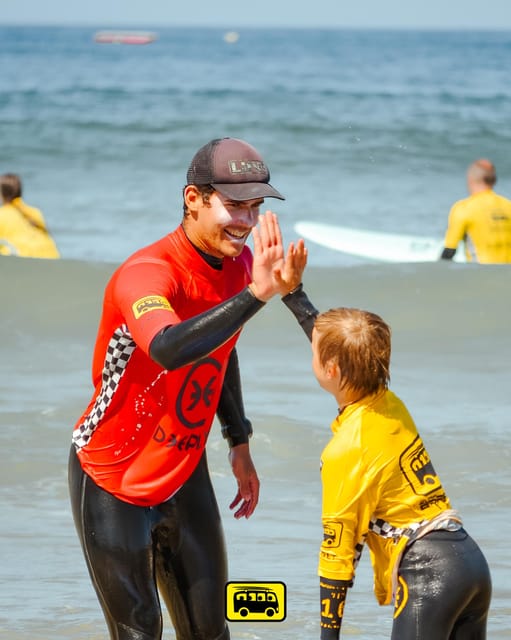
For beginners, that doesn’t automatically mean “good”. Beginner courses go wherever the right wave is on the day – Amado, Arrifana, Bordeira or Beliche – and the school decides that on the morning, not you at the time of booking. A course that promises you a specific beach in advance is promising something it can’t keep.
From Sagres, a three-hour course for all levels costs €75, wetsuit and board included. The overview is in things to do in Sagres.
The Fishermen’s Trail – and when it’s not a stroll
The Rota Vicentina runs the length of the coast, a network of walking trails made up of two main routes: the Caminho Histórico inland, and the Trilho dos Pescadores, the Fishermen’s Trail, right along the edge. The Fishermen’s Trail is the better-known one: around 226 kilometres in thirteen stages from São Torpes near Sines to Lagos, always along the clifftop, with sea views for almost the entire route.
You don’t have to walk it all in one go. Individual stages work well as day walks, and the sections around Carrapateira and Arrifana are among the most rewarding.
Two honest points about it. First: a large part of the route runs through deep sand, which is more tiring than the elevation gain suggests. Second: there’s hardly any shade. The recommended time is September to May or June – in July and August the trail isn’t dangerous, but it’s unpleasant, and doubly so with children.
Storks that nest on sea cliffs
One feature that truly makes the Costa Vicentina unique, and that no brochure mentions: white storks build their nests on rocks right above the sea here. This isn’t documented anywhere else in the world – storks usually nest on roofs, poles and trees inland. The nests sit on rock pinnacles and cliff ledges, in some cases just a few metres above the surf.
They’re best seen in spring and early summer. The dependable place, though, is not the Algarve stretch but Cabo Sardão near Cavaleiro in the Alentejo, around 90 kilometres north of Sagres and a good hour and a half’s drive: there the nests sit within sight of the lighthouse car park. If you’re driving and spot a white patch on a rock out in the water, it’s worth stopping.
Getting there, roads and the car
From Sagres, the N268 runs north via Vila do Bispo and Carrapateira, after which the N120 continues to Aljezur and Odeceixe. The road is well maintained but winding and slow in places – allow considerably more time than the distance suggests, especially behind motorhomes.
Without a car, it gets difficult here. There are bus connections between the larger towns, but they’re built around school and everyday traffic, not beach visits, and many beach access points lie several kilometres outside the towns. If you don’t have a week to spare for detours, rent a car or book a guided trip.
What a guided trip costs
There are several formats for the west coast from Sagres. A half-day 4x4 tour into the nature park costs €78 (4.8 stars from 59 reviews), a full-day trip along the west coast costs €90. A seven-hour guided coastal tour by minibus costs €135.
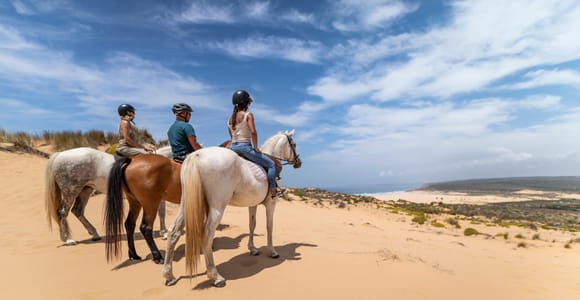
Something else has the strongest reviews: the one-hour horse riding trip near Carrapateira, with 5 stars from 360 reviews for €70, plus a two-hour beach version at Praia da Bordeira at sunset or in the morning for €140. No other activity in the area holds the full star rating over that many reviews, and the reason is obvious: three kilometres of empty beach is a different experience on horseback than on foot.
When to come – and when not to
September and October are the best time: warmest water, calmer wind, walking trails passable, everything open.
April to June are the second-best choice. The meadows between the cliffs are in bloom, the storks are nesting, the beaches are empty. The water is cold.
July and August work, but they’re the weakest time for exactly what makes this coast what it is: the car parks at the well-known beaches fill up by mid-morning, walking is too hot, and the north wind can blow for days on end.
November to March is for people who want to see storms. A lot is closed, tours run irregularly, and the road to the cape in the rain is no pleasure. In return, you have the coast to yourself.
With small children, different rules apply – which beaches are shallow enough and what a day here realistically offers is covered in Sagres with kids. You’ll find more articles about the area in the guides.