Best time to visit Sagres: why September is the warmest month, not August
Updated September 10, 2026 · 7 min read
At most places on the Algarve, the temperature curve answers the question of when to visit. In Sagres, it answers almost nothing.
The town sits at a corner where the south coast ends and the open Atlantic begins. What shapes a holiday day here isn’t the air temperature, but a combination of wind, water temperature, and whether three restaurants are open in the evening or just one. All three follow a different calendar from the rest of Portugal.
The numbers everything here hinges on
Air. Average daytime highs range from 16 °C in January to 24 °C in July and August; at night they sit between 11 and 19 °C. That’s a remarkably narrow range – the Atlantic moderates in both directions. It’s rarely hot here, and rarer still cold.
Water. Colder than the air would suggest. The coldest month is February at around 15 °C, the warmest is September at roughly 20 to 21 °C. August comes in below that. This isn’t a measurement quirk – it’s the reason Sagres behaves differently from Albufeira: if the north-westerly wind holds for a few days, it pushes the warmed surface water out to sea, and cold water rises from below to replace it. A single windy start to the week in July can knock several degrees off the water.
Rain. It falls almost entirely in the winter half of the year. December brings an average of around 86 millimetres over just under eight rainy days, while July gets practically nothing – one millimetre, statistically not even a single rainy day. Between June and September, you can safely ignore rain when planning.
Daylight. On 21 June there are 14 hours and 42 minutes of it, on 21 December 9 hours and 37 minutes. In winter that means: if you open the fortress at 9.30am and then drive to the cape, you’ve already used up half the day.
The wind isn’t in the table
On monthly average, July is the windiest month at around 25 km/h and September the calmest at around 18 km/h; December sits between them at around 22 km/h. The figures are correct and still misleading, because they lump together two completely different things.
Winter wind arrives with low-pressure systems, lasts a day or two, and moves on. Summer wind is a schedule: the Nortada, blowing from the north-west, sets in around midday on many days between May and September and keeps blowing until evening. Its individual gusts are weaker than a December storm’s – but because it turns up almost daily rather than on one or two days, it is precisely what lifts the monthly average. And it is the more relevant wind for a holiday, because it arrives exactly when you’re lying on the beach.
In practice, this isn’t a reason to rule anything out, it’s a matter of planning your day: the west side in the morning, the sheltered coves on the south side in the afternoon. Tonel and Mareta are twenty minutes’ walk apart, and sometimes three wind strengths apart. Which beach works when is covered in What to See in Sagres.
September: the month this place was made for
The warmest water of the year, the calmest wind of the year, everything open, tours running at full schedule, and school holidays over in most countries of origin. If you’re only coming once and get to choose, come in September.
On top of that, late September is when the thing Sagres is known for among naturalists begins: the headland sits on one of Europe’s major migration routes, and from August to October birds of prey gather here before moving on. It’s at its densest between the last week of September and the first week of October.
October: empty, warm – and unsupervised
October is the underrated month. The water still holds its warmth, the walking trails are pleasant to hike, prices come down, and the coast belongs to the people who live there again.
There are two things to know. First: the official bathing season in the municipality of Vila do Bispo, which Sagres belongs to, runs from 1 June to 30 September. From 1 October, you’re on the same beaches in better weather and without lifeguards. What that means for families is covered in Family-friendly Beaches near Sagres.
Second: from 2 to 5 October 2026, the Sagres Birdwatching Festival takes place, organised by the Vila do Bispo council together with SPEA and the Almargem association, in its 17th edition this year. For birdwatchers, that’s the reason to come. For everyone else, it’s a heads-up that accommodation in the village is unusually full during those days.
July and August: dry, busy, windy
They work, and they’re the weakest time for what makes this place what it is. It doesn’t rain, that’s the upside. Against that: the Nortada on most afternoons, water below the level of the south coast, the highest accommodation prices of the year, and full car parks at the well-known beaches from mid-morning onward.
If you come in high summer because school holidays dictate it, don’t expect bath-warm water – a thin wetsuit extends an afternoon in the water more than any beach toy – and schedule outings for the early hours. Where the big-ticket items of a family week add up is worked through in What a Week in Sagres with Kids Costs.
May and June: the second good answer
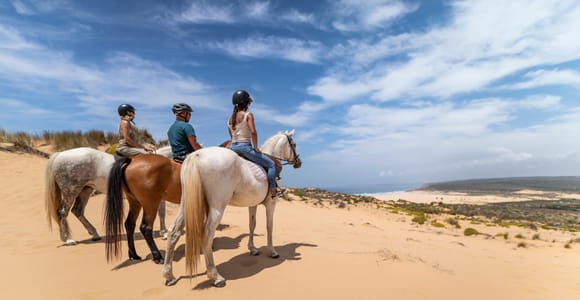
Mild, long daylight hours, everything open, noticeably less crowded than August, and cheaper. The catch is the water: it warms up late here, and in May it’s too cold for swimming for most people. For hiking, horse riding, boat trips and the fortress, this is the most pleasant time of year – for a swimming-focused holiday, it isn’t.
November to March: for people who want to see storms
The coast is magnificent in these months, and the town is half shut. Many doors carry a Fechado sign, some places close for weeks at a time, and there’s almost nothing indoors in the village if it rains. Tours run irregularly or not at all – a boat that heads out past the cape into the open Atlantic stays in harbour when there’s swell.
If you come anyway, you need accommodation with a kitchen and a plan B. What works with kids on a day like that is covered in Sagres with Kids on a Rainy Day; how eating out changes outside the season, in Eating Out with Kids in Sagres.
One detail for planning your day: the fortress opens at 9.30am year-round, but between October and April it closes as early as 5.30pm instead of 8pm, with last entry half an hour before closing.
What runs when
Dolphins. Trips run all year, sightings cluster between May and October, most reliably on calm mornings. The short trip costs €50, dolphins and caves combined €65, the longer wildlife trip with a chance of whales €95. The overview is at Dolphin Watching in Sagres.
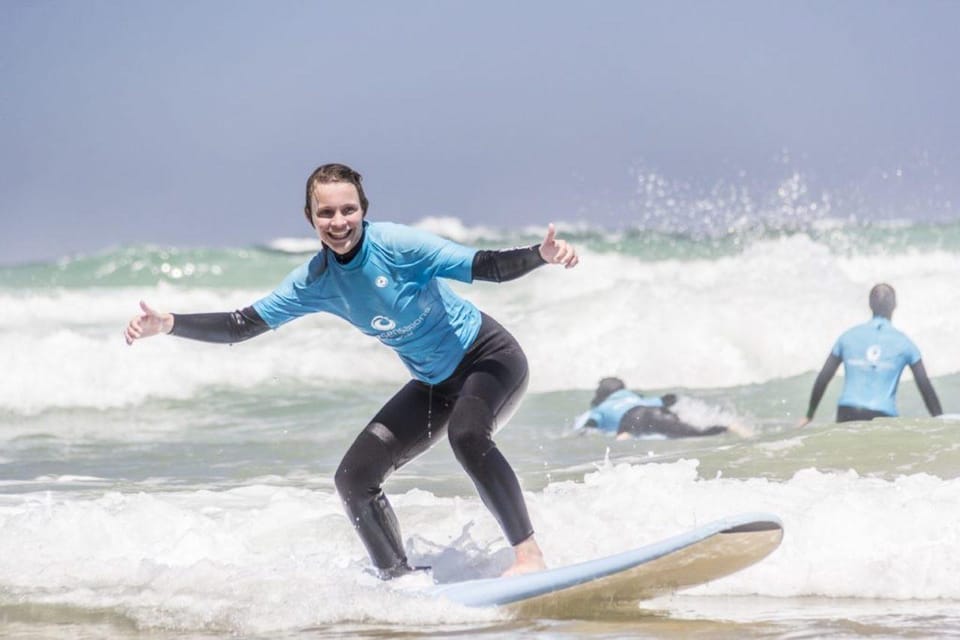
Surfing. The calendar runs the opposite way: from June to August the waves are smaller and the water warmer – beginner season. The powerful swell comes from autumn to spring and belongs to people who can already stand up on a board. The course for all levels costs €75.
Sunset. Year-round, and at a more family-friendly time in winter. The 4x4 tour to the cape costs €63, the version without a 4x4 €55. All prices are from-prices per person, as of September 2026.
The short version
September is the best week of the year, if you get to pick one. October is nearly as good, but without lifeguards. May and June are ideal for everything except swimming. July and August are the most expensive and windiest time, and still fine if the holidays dictate it. November to March is a trip to the coast, not to the holiday resort.
And if you want to head north beyond Sagres, the month-by-month question for the whole west coast is answered in Costa Vicentina. Everything bookable is at Things to Do in Sagres, and more articles in the guides.