Seasickness in children: why it happens off Sagres of all places, and what helps
Updated September 9, 2026 · 6 min read

There is a reason this topic gets its own article for Sagres, while nobody asks about it for Albufeira: here, the boats do not run along a sheltered coastline, they round a headland into the open sea. Anyone booking with children should know this beforehand – not to avoid it, but to choose the right trip.
First, what this article does not cover: we do not recommend any remedy for seasickness, neither a medication, a wristband, nor a tea. That is a question for the pharmacy or your child’s doctor, and it should be asked before the trip. What is covered here are the decisions that come before that – the trip, the time of day, where to sit on board, and when to skip it altogether.
Why it rocks more here
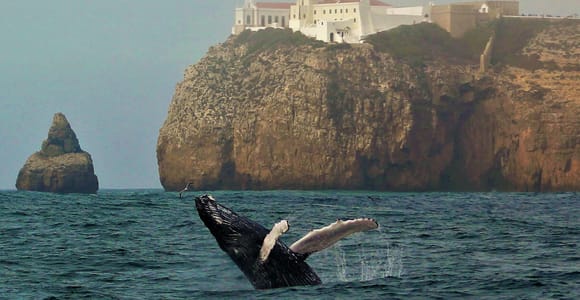
The excursion boats depart from Porto da Baleeira, the fishing harbour east of the town. The harbour lies on the sheltered south side. As soon as the boat rounds Ponta de Sagres, it is out in the open Atlantic off Cabo de São Vicente.
That is exactly the appeal of these trips – open water rather than a bay – and also the reason for the motion. The swell runs in from the north-west around the headland and meets the current running along the point there. The result is a short, uneven motion, and it is the unevenness that affects children, not the height.
The single most useful sentence for parents: no wind in town does not mean calm water out there. The swell does not need local wind – it comes from a low-pressure system somewhere out in the Atlantic. A mirror-flat harbour and a choppy trip are not mutually exclusive here.
The time of day matters more than the date
At this particular headland, the northerly wind picks up as the day goes on – mornings are typically calmer than late afternoon. For a trip with children, this is the single most important decision, and it costs nothing: take the first departure of the day.
Second most important decision: not on arrival day. A short night, a long flight, then the winding road from Faro or Lagos to here – and straight onto a boat afterwards. That combination works reliably even on adults, just in the wrong direction.
Which trip to choose with a sensitive child
From Sagres there are three formats, and for this particular issue they are not equivalent.
1.5 hours, dolphin watching, from €50. The short trip. If you are at all unsure, this is the only one you should book. An hour and a half is still manageable even if a child is not feeling well.
2 hours, dolphins and caves, €65. The usual compromise – and it has a genuine advantage here: part of the time is spent along the coast and at the caves, where there is less motion than out in the open search area. Given the choice between two and three hours, take this one.
3 hours, wildlife trip with a chance of whales, €95. The furthest trip, the most impressive – and the wrong one for a sensitive child. It goes furthest out, has the longest stretches without anything happening, and cannot be shortened.
There are also departures from Salema, a good twenty kilometres to the east, from €50. Salema sits on the south coast, and the trip area there is different – if you know your child is sensitive, this is a genuine alternative, though it means half an hour in the car beforehand. An overview of all the trips is at Dolphin watching in Sagres, and the question of minimum age and boat type is covered in Boat trips with kids.
What to ask the operator before booking
Three questions no listing answers, and that matter precisely here:
- What kind of boat is it? Small, fast boats bounce shorter and harder; larger boats roll more slowly. The two feel quite different, and children generally cope better with the slower roll than with the hard bouncing.
- Can the boat turn back early if a child feels unwell? On a shared trip with other guests, the answer is usually no. That is not unfriendliness, just the nature of the trip – but it is worth knowing before you are thirty nautical miles out.
- Is there a toilet and a sheltered spot on board? On the open boats that run here, often not.
On board: the things actually within your control
These are not remedies against nausea, but ways to avoid the circumstances that encourage it:
Where you sit. Amidships and as low as possible is the calmest spot on any boat – right at the bow is the roughest, and that is exactly where children want to sit. Board early and you get to choose.
Where you look. At the horizon, not at a phone, not at a map, not into a bag. Children who want to film spend half the trip staring at a small screen – on this particular issue, that is not a minor detail.
Fresh air. Sit outside rather than in a cabin, even if it is cool. Putting on an extra layer is the better solution than going inside.
Speaking up. Tell the crew early if a child is not feeling well. They run this route every day and know exactly where the calmest spot on their boat is.
And there is another factor: a child who is already anxious about feeling sick beforehand is more likely to become seasick. Talking about it for hours in advance creates part of the problem yourself.
When to skip the trip
There are days when the right decision is not to go, even if the operator is running the trip and the money is gone:
- If there is already a noticeable wind in town. Out there, it will be more, not less.
- If a child was not feeling well the evening before.
- If there is nothing between the departure and the rest of the day that you can fall back on.
As for the booking itself: many trips can be cancelled free of charge up to 24 hours in advance – but not all of them, and the deadline is stated on the relevant booking page. Anyone travelling with a sensitive child should specifically choose a trip with this option. If the operator cancels because of the weather, that is a different case and is covered in the terms.
If your child is already sensitive in the car
Then this concerns more than just the boat trip. Two of the most popular offerings in Sagres are jeep safari tours: four hours on dirt tracks for €63, or a full day for €90. On bumpy sandy tracks with constant changes of direction, some children feel just as sick as on the water, and you cannot get out there either.
The same applies to the drive north to the Costa Vicentina: the N268 is winding, and driving it twice in one day makes for a long afternoon with a sensitive child. How to split that up is covered in What to see on the Costa Vicentina.
The good news: the programme this place is known for is mostly on land and on the move anyway – beach, clifftop path, fortress, harbour. What is worth doing is covered in What to see in Sagres and in the overview at Sagres with kids. All bookable activities are listed under Things to do in Sagres, with further articles in the guides.